If you are a teacher of students aged 7 to 12, use these projects, units of work, and professional development courses to help you teach them data literacy. You can use them in computing or other lessons.
About data literacy
Data literacy is the ability to gather, visualise, interpret, and communicate data as information, and understand the role of data in making decisions that impact society and the environment. It is fundamental to science, areas of mathematics, and AI literacy.
Using the micro:bit enables opportunities to experience first-hand how data collected by computer sensors becomes digital data. The resources on this page support learning about how data becomes information so it can be used in problem-solving, making decisions, and recommendations for change.
Mathematics
Projects for use in mathematics lessons

Make it: code it
Counter
Count skips, jumps, birds - or anything!
Make it: code it
Distance calculator
Use your micro:bit to measure distances.

Make it: code it
Traffic survey data logger
Survey traffic, wildlife or anything around you!

Unit of work
Barefoot - litter hunt
Two lessons aimed at students aged 9-11. Students use buttons and sensors on the micro:bit to make different images display, are introduced to the concept of variables, and create a device that records details of litter that can be recycled in the local area.

Unit of work
Data handling
Five lessons aimed at students aged 9-10 years. Students explore data and the sensors on the BBC micro:bit through a variety of unplugged and programming activities.
Science
Projects for use in science lessons

Make it: code it
Thermometer
Make a simple thermometer with your micro:bit
Make it: code it
Indoor-outdoor thermometer
Sense how warm or cold it is outside
Make it: code it
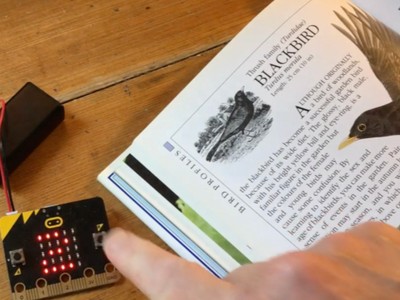
Species counter
Count different species of plants and animals.

Make it: code it
Environment exploration
Measure temperature, sound and light levels around you

Make it: code it
Sound meter
Measure the noise around you
Make it: code it
Sound volume experiment
Measure sound over distance.
Make it: code it
Solar panel experiment
Decide where to put a solar panel with your micro:bit.
Make it: code it
Light experiment
Investigate materials to see how much light they let through
Make it: code it
Human circuit experiment
Complete an electrical circuit with your body!

Make it: code it
Evaporation experiment
Discover evaporation rates in different locations.
Make it: code it
Insulating heat experiment
Investigate the thermal insulation properties of materials.
Professional development
Science exploration with the micro:bit (35 mins)
Introduces how to use the BBC micro:bit as an effective tool to support hands-on science investigations in your classroom. It highlights four engaging, practical science investigations that you can take back to your classroom.
AI
Data is an integral part of machine learning and other kinds of AI

Make it: code it
Simple AI exercise timer
Make a smart exercise timer using AI

Unit of work
CreateAI taster lessons
Two lessons introducing the concepts of AI and machine learning using micro:bit CreateAI.
Professional development
Let's talk about ... AI literacy (30 mins)
Explores foundational AI concepts and vocabulary with a focus on understanding how it works, the human role in designing them, and considering their impact. Includes strategies for teaching AI literacy in your classroom.
Sport
Projects for use in sports lessons
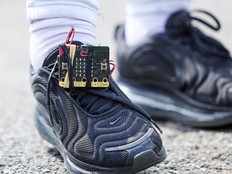
Make your own step counter with a micro:bit
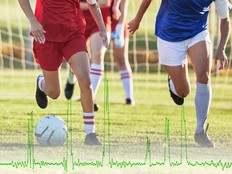
Use data science to improve your sports skills

Log time spent running, walking and being still.