New! Introducing First lessons with Python and the micro:bit
Learning Python is an exciting next step for learners aged 9 - 14 who are ready to move beyond block-based coding. Our new First lessons with Python and the micro:bit resource supports teachers with six classroom-ready lessons based on familiar micro:bit projects.
Why introduce Python?
Python is one of the world's most popular programming languages and features in many computing curricula around the globe. It is widely used by software developers, data analysts, scientists, engineers, and researchers to solve real-world problems.
For learners, Python is often the first text-based programming language they encounter. Its clear syntax makes it an accessible introduction to text-based coding and a natural next step after working with blocks.
Learning Python helps learners deepen their understanding of programming concepts and prepares them for more complex coding projects in the future.
Supporting the transition from blocks to text-based programming
Our new First lessons with Python and the micro:bit resource has been created specifically to support learners as they move from block-based to text-based programming.
The six lessons are based on the same projects featured in our popular First lessons with MakeCode and the micro:bit resource. By working with familiar projects, learners can focus on understanding Python syntax and programming concepts rather than learning entirely new activities.
You can use these lessons with learners who are ready to take their first steps into text-based programming, whether they are transitioning from MakeCode or encountering Python for the first time.
The first lesson introduces learners to the micro:bit Python Editor and its key features. In the following lessons, learners compare MakeCode and Python versions of projects before recreating, modifying, and personalising them in Python.
The projects include:
What learners will explore:
- algorithms
- inputs and outputs
- sensors
- animation
- sequence
- iteration
- selection
- variables
- randomisation
The activities encourage learners to experiment with code, solve problems, and create their own variations of each project.
Designed for the classroom
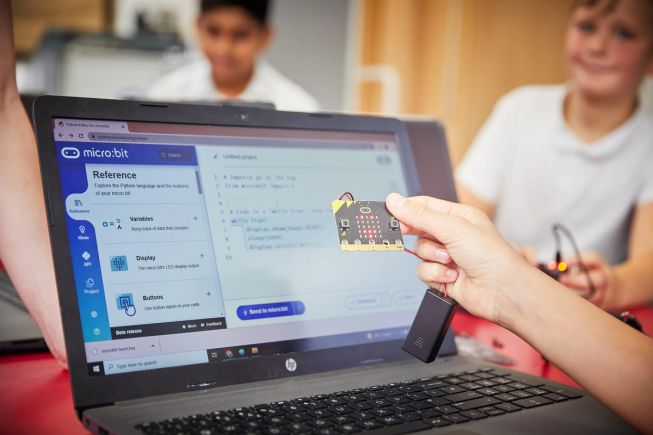
The micro:bit Python Editor is designed for use in the classroom and makes text-based programming easy.
The lessons use the free micro:bit Python Editor, which has been developed with teachers and learners in mind. Key features include:
- Built-in simulator: Learners can test and debug their code before transferring it to a physical micro:bit.
- Integrated reference: A built-in reference library explains programming concepts and provides code snippets that learners can drag directly into their projects.
- Error highlighting: Common coding errors are underlined and accompanied by guidance to help learners identify and fix problems.
- Autocomplete: Learners can discover available commands, use correct syntax, and code more efficiently.
- Automatic indentation support: The editor helps learners use indentation correctly and highlights indentation errors, supporting one of the key concepts in Python programming.
Explore more Python resources
Looking for additional support?
- Join our free webinar on 10 June to explore the materials and support available to help you run the First lessons with Python and the micro:bit lessons.
- Take our free 15-minute professional development course introducing the micro:bit Python Editor.
- Download and print our classroom posters designed to support debugging and creative coding in Python.
Ready to get started? Explore First lessons with Python and the micro:bit and help your learners take their next step into text-based programming.
In addition to these lessons, we have a wide range of micro:bit projects to help you get creative with the micro:bit Python Editor.