Kick off World Cup coding with the BBC micro:bit
Turn World Cup excitement into a learning opportunity with football-inspired coding, data science and physical computing ideas for your classroom.
With the 2026 World Cup kicking off, millions of people around the world will be following the action. For teachers, it's a great opportunity to connect learners' enthusiasm for sport with coding, creativity, data science, and physical computing.
Using a BBC micro:bit, learners can combine sport, data, and technology to investigate questions, collect real-world data, and design their own football-inspired projects.
Bring coding to life through movement
Sport and physical activity can provide a powerful context for learning. Whether learners are tracking steps on the football pitch, analysing kick strength, or creating technology that responds to movement and sound, physical computing helps make abstract coding concepts tangible and engaging.
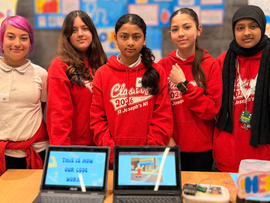
At Carmel Convent School in Chandigarh, India, students recently explored Python programming with micro:bits through a series of hands-on projects including step counters, jump counters, kick strength analysis and data logging. They also experimented with projects such as Clap Lights, demonstrating how code can be used to respond to real-world inputs and interactions.
Students at Carmel Convent School, Chandigarh, India, explore Python programming with the BBC micro:bit through hands-on projects during a four-day workshop led by micro:bit Champion Dr Kadam Bhambari, Founder of STEM Seeds.
Students at Carmel Convent School, Chandigarh, India
Turn football into a coding challenge
Many of our free Make it :code it projects can be adapted with a football theme.
Track movement on the pitch
How far does a defender run compared to a striker? Does a midfielder cover the most ground?
Using our step counter project, learners can predict and track the number of steps they take during a game, then compare and analyse their results.
Build a football fitness coach
Adapt our activity picker project to create random warm-up drills before training or PE lessons.
Learners can customise the code to generate their own challenges and compare which activities best prepare them for a game.
Collect sports science data
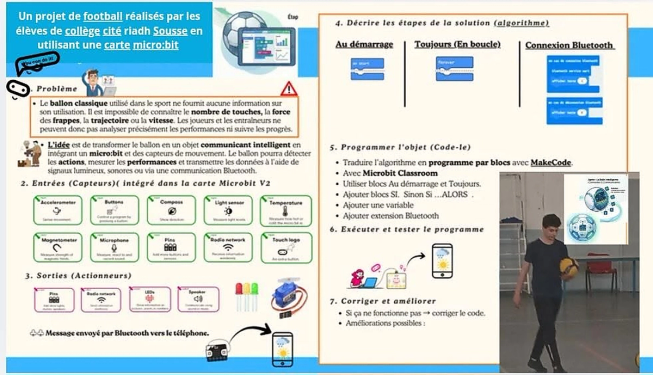
Students at Cité Riadh College in Sousse, Tunisia, designed a football-themed BBC micro:bit project that uses sensors and Bluetooth to collect and share performance data.
With our kick strength data logger, learners can investigate how powerful their kicks are and use data to track improvement over time.
It's a great introduction to collecting, visualising and interpreting real-world data while exploring how technology is used in sport.
The CBBC programme The Football Academy used the project to find out who had the strongest kick, using the micro:bit's accelerometer to measure acceleration. It's a fun way to demonstrate how professional sports teams and athletes work with scientists to collect and analyse data that can help improve performance.
Explore AI and performance data
How much time do players spend running, walking, or standing still during a match?
Using our AI sports data logger project, learners can train a machine learning model to recognise different movements and compare performance data between players.
It's an engaging way to introduce concepts in AI, data science, and sports technology.
Count goals automatically
By adapting our species counter project, learners can investigate how sensors can be used to collect information automatically.
Rather than tracking animals passing by, the project can be adapted to detect goals scored or shots taken during a game, helping learners explore how technology can be used to collect and analyse data.
micro:bit Champion Euan Morrison from Scotland adapted the project to create a football goal sensor. Using a simple foil switch attached to the net, the micro:bit automatically records a goal when the ball hits the back of the net, demonstrating how a simple idea can be transformed into a practical sports data project.
micro:bit Champion Euan Morrison adapted our Species Counter project to create a football goal sensor that automatically detects and records goals using a simple foil switch attached to the net.
Stay calm under pressure
Even elite footballers need to manage nerves.
Our calming LEDs project uses animations to guide breathing exercises and can help learners explore how technology can support focus and wellbeing before a big game.
Extend your football-themed projects
The ideas above are just the starting point.
One of the great things about physical computing is that learners can adapt existing projects, combine different concepts and create something entirely new. Here are two examples inspired by the World Cup.
Design your own football game
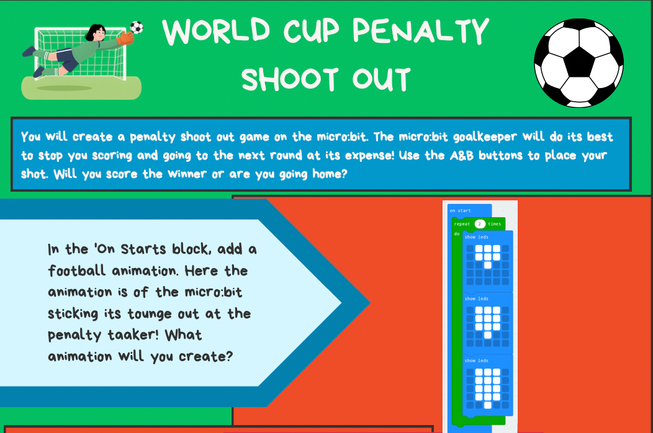
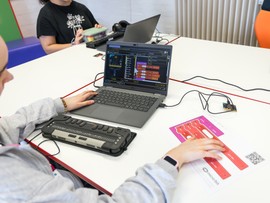
A football-themed BBC micro:bit worksheet showing how learners can create their own World Cup penalty shoot-out game.
If your learners enjoy creating their own projects, micro:bit Champion Chris Lovell has developed a football-themed penalty shoot-out game inspired by the World Cup.
In the game, the micro:bit becomes a goalkeeper with a personality all of its own. Will it stick out its tongue after a save? Dance to celebrate? Blow raspberries? Tell the player they were lucky when they score?
The project starts with a simple idea but gives learners plenty of scope to personalise, modify and extend the game.
Can a micro:bit predict the World Cup?
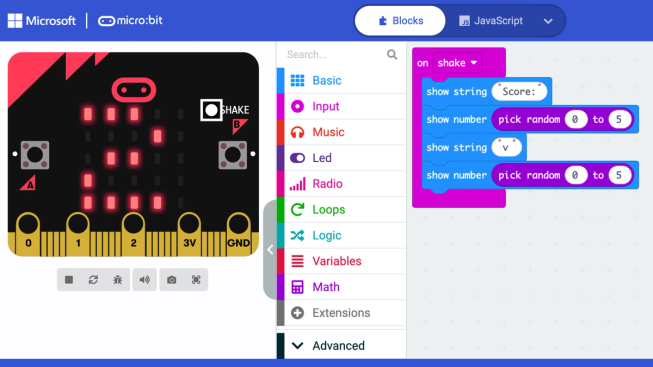
Lorna Gibson's World Cup score predictor challenges learners to compare their own match predictions with randomly generated scores from a BBC micro:bit.
Think you know who will win?
Lorna Gibson, Head of Professional Development at the Micro:bit Educational Foundation, has created a World Cup score predictor.
Challenge learners to predict match results themselves, then compare their guesses against the micro:bit's randomly generated predictions. Who will be more accurate by the end of the tournament?
From the pitch to data science
Football can be a powerful context for exploring computing, data science and artificial intelligence.
Dr Marcelo Worsley, Karr Family Associate Professor, Computer Science and Learning Sciences Director, Technological Innovations for Inclusive Learning and Teaching (TIILT) lab, Northwestern University, studies how technology and sport can be combined to create engaging learning experiences.
As Marcelo explains, young footballers often bunch together around the ball "as if the ball is a magnet that draws everyone closer". Using the radio signal strength on a micro:bit, learners can investigate the relative distance between players and explore how data can be used to understand movement and positioning on the pitch.
It's a simple but powerful example of how sport can help learners develop skills in data collection, analysis and computational thinking. Dr Worsley explores these ideas further in Taking Coding to the Basketball Court: Rethinking Data-Oriented Education through Sports, which looks at how sport can be used as a context for teaching coding and data science.
Beyond football
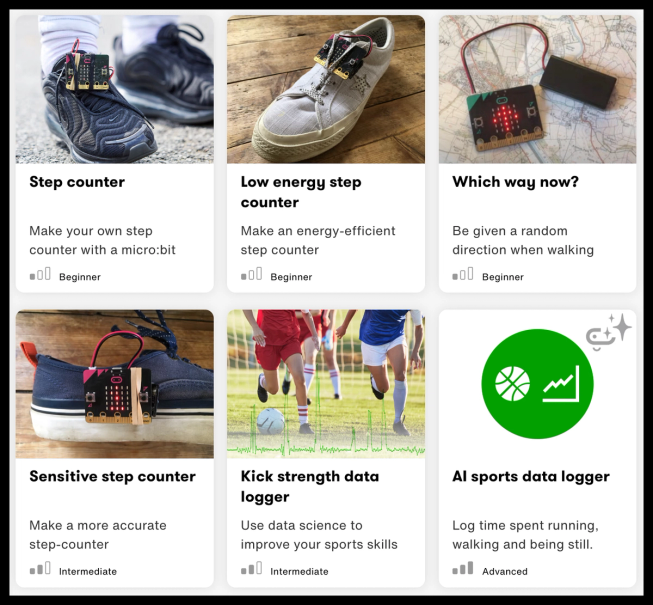
From step counters to sports data logging, these BBC micro:bit projects help learners explore coding, data science and physical computing through sport.
Sport naturally generates questions that learners want to investigate.
How fast am I moving? How many steps did I take? How powerful was that kick? Can AI help me understand my performance? Can data help improve teamwork?
By connecting coding and physical computing to activities learners already care about, we can help them see how computing is used in the real world — from sports science and wearable technology to artificial intelligence and data analysis.
So whether your learners are passionate football fans or simply enjoying the excitement of the World Cup, it's the perfect opportunity to pick up a micro:bit, get active, and start creating.
Ready to get started? Explore our football-inspired projects and see where your learners' ideas take them.
Share your projects
Tried one of these ideas, or created your own football-themed project? We'd love to see it. Share your BBC micro:bit creations with us on Instagram or Facebook.