we:create = micro:bit + creativity
What happens when young people’s ideas meet the possibilities of the micro:bit? Introducing we:create, a new initiative exploring creativity, collaboration and community.
Six colourful variations of the we:create project logo, designed by Ells, a student at Hereford College of Arts (HCA).
we:create is a new initiative from the Micro:bit Educational Foundation that brings young people together to explore creativity, collaboration and technology through the BBC micro:bit. Inspired by the Foundation’s mission ‘to inspire every child to create (their best digital future)’, it encourages young people to develop ideas and create with technology, drawing on their own experiences and communities. By putting creativity and a sense of belonging at the heart of the experience, we:create aims to make computing more accessible, inclusive and relevant to young people who might not otherwise see it as something for them.
Ideas develop together
Creativity starts with ideas, and we:create places collaboration at the heart of how those ideas develop. Working with people with diverse experiences helps young people build on each other’s thinking, challenge assumptions and reduce bias, encouraging more inclusive ideas from the beginning.
Making room for everyone
we:create adopts the five stages of Design Thinking – empathise, define, ideate, prototype and test - to help young people develop ideas and explore what they can create with the micro:bit. Structured ideation activities encourage them to draw on their lived experiences and develop creative projects together. Everyone’s ideas are welcomed, helping to build a sense of belonging and motivation to learn.
These approaches aim to help young people who do not usually think computing is ‘for them’ enjoy it and see its relevance. In the longer term, the hope is that some will go on to work in the digital economy, helping to make it more representative of society and inclusive.
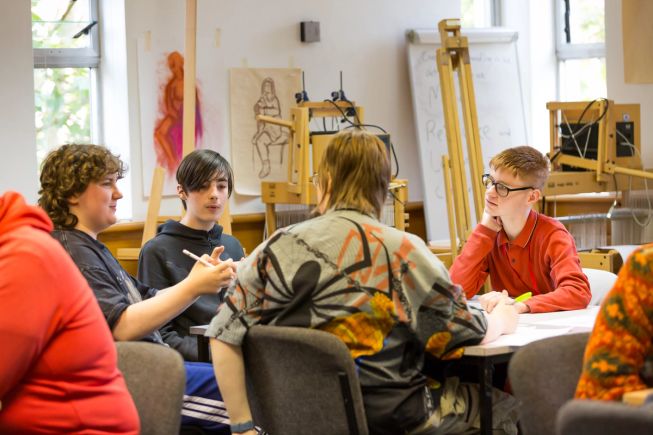
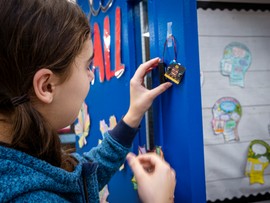
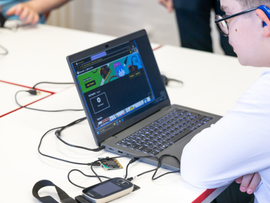
Students from Hereford College of Arts (HCA) and the Royal National College for the Blind (RNC) collaborate on the we:create project.
Technology for all
we:create draws on Universal Design’s seven principles to support accessibility. It focuses on making designs appealing to all users, encouraging young people to develop inclusive ideas and take a ‘technology for all’ approach. The Foundation has also piloted and prepared resources informed by Universal Design for Learning.

We want we:create to be joyful and relatable, because feeling positive about what you’re doing can make you want to learn more.
Tom Doust, Chief of Learning, Micro:bit Educational Foundation


Connecting communities
Using micro:bits to create shared experiences challenges the idea that technology isolates people. Through we:create, we want to bring communities together to celebrate local places and identities. The micro:bit’s radio feature allows devices to send and receive messages wirelessly, making it possible to create connected experiences like these. To help communities around the world create their own we:create experiences, the Foundation is developing a toolkit with creative ideation activities, an introduction to the micro:bit and its radio feature, and practical guidance on connecting large numbers of micro:bits.
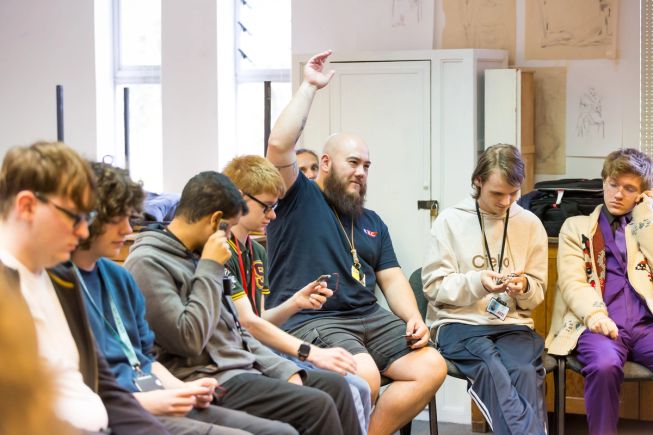
Launched as part of the Micro:bit Educational Foundation’s 10th anniversary, we:create brings together artist Emma Posey and software engineers Sam Tygier and Lizzie Salmon from the Science & Technology Facilities Council. They collaborated with young people from Hereford College of Arts, Lord Scudamore Academy, Royal National College For The Blind, Cultivate at the Sidney Nolan Trust and the Foundation’s Youth Ideation Panel.
Organisations, funders and collaborators who helped bring we:create and micro:wave to life.
micro:wave: ideas in motion
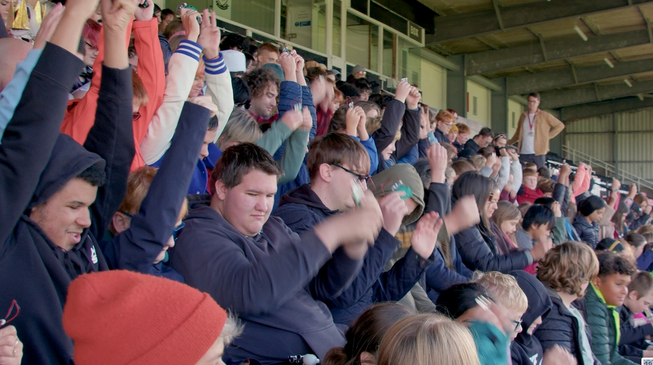
Young people were at the heart of micro:wave, which brought 200 participants together at Hereford Football Club’s stadium to create new variations of the Mexican wave. Each participant used a micro:bit running the micro:wave program with a unique ID received over the radio, with all 200 devices networked together - a world first! The event was a ‘Happening’ - a live, participatory art experience with an element of uncertainty, staged in an unusual location.
During micro:wave, each participant’s micro:bit signalled when it was their turn to stand up, raise their arms and sit back down. As the signals moved through the crowd, waves of movement created different patterns across the stands. To make the experience accessible, each micro:bit used at least two types of signals, combining flashing lights, sound and, for some participants, vibration.
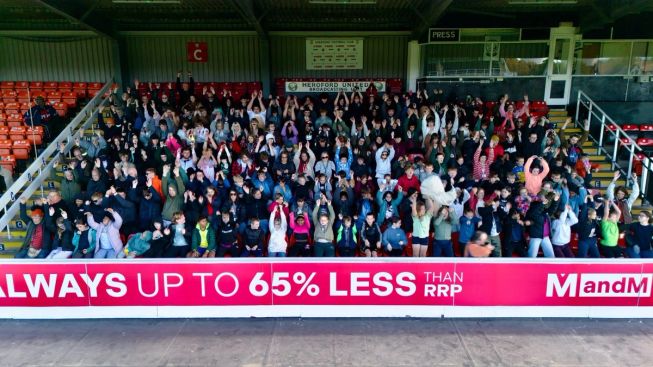
Participants create a movement wave with networked micro:bits at Hereford Football Club during micro:wave.
Sam’s involvement had a personal connection: he first learned to program on a BBC Micro at primary school. He and Lizzie developed the micro:wave program in MakeCode, using radio to coordinate a large group of micro:bits and turn participants’ ideas for moving patterns into code. They tested it in a busy lab canteen to explore the radio’s limits for interference and range.
A new extension will provide blocks that simplify sending and receiving control messages, making it easier to create similar projects using many micro:bits.
Creativity sparks innovation
The micro:bits’ vibration signals came from an add-on board, the HaptiBit, designed by John Vidler to help people who are deaf or hard of hearing sense their micro:bit’s output. Justin Marshall’s mb30rack made it easier to organise and handle the 200 micro:bits, each assigned to a specific stadium seat.
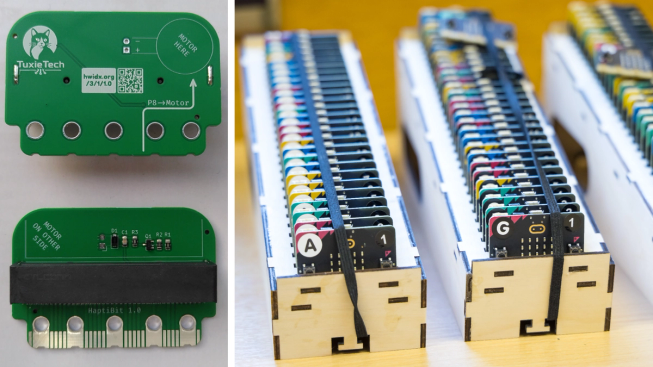
The HaptiBit haptic feedback device alongside BBC micro:bits held in specially designed mb30racks for the micro:wave event.
Created together
Sponsored by the Micro:bit Educational Foundation, micro:wave brought we:create’s ambitions for creativity and community collaboration to life. The wider we:create project has been made possible through funding from Herefordshire Community Foundation. Thank you to everyone who helped make it happen.
A celebration of creativity and collaboration, featuring artwork created by students from Hereford College of Arts (HCA) for the we:create project.
Special thanks to the tech team and stewards who volunteered their time to micro:wave, and to all the young people from participating schools and colleges whose ideas helped shape the event. Thanks also to the second-year students on Hereford College of Arts’ Creative Media Production & Technology course, who created the digital artwork, including videos and animations, and the project branding.
The we:create toolkit will be launched in January 2027 - register your interest below: