Skip to content

Underwater Volcano Monitoring

Underwater Volcano Monitoring

This project uses the micro:bit tho detect volcanic activity and send data to a research team.

Socialinnov

Manos, Philip, Anna, Panagiotis, Antonis, Dionysis, Giannis, Paraskevi

2024

Global goals

SDG 14 Life Below Water

Our project

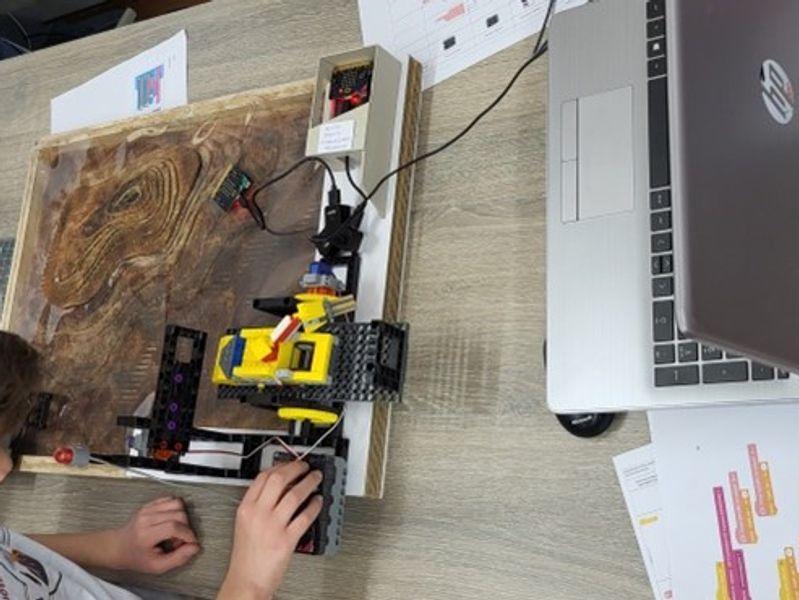
We are a group of students from a primary school in Pefki. Our team name is SeaSTEM. In our Geography class, we started discussing natural disasters and their consequences for humans. We used three micro:bits. Through the micro:bit, we can detect seismic activity at the volcano and send a signal to the Research Center’s screen, record temperature changes in the area’s waters by creating a graph, and automatically send the robotic research vessel to collect samples from the seabed.

Our inspiration

After researching underwater volcanoes in the Mediterranean and their eruptions, we understood how important it is to monitor their activity. Thus, we created an Underwater Volcano Monitoring System at the Underwater Volcano Research Center with mechanisms and automations based on the occurrence of seismic activity, temperature changes, and the collection of volcanic rock samples by robotic vessels.

You may also be interested in

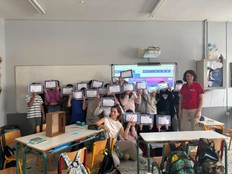
Students pose with their teacher in their classroom in front of a projection showing the code for the project.

This inclusive project engaged primary school students—including those with special educational needs—in exploring the science of earthquakes through hands-on STEM activities and micro:bit programming. By combining scientific inquiry with creative problem-solving in an accessible and supportive environment, students collaboratively designed and tested earthquake detection and safety solutions, developing both technical skills and social-emotional competencies.

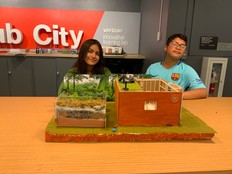
Students pose with their Evapotranspiration Project prototype.

This project uses micro:bits to simulate wind power, control lights, and monitor humidity in an evapotranspiration toilet.