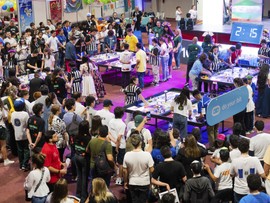
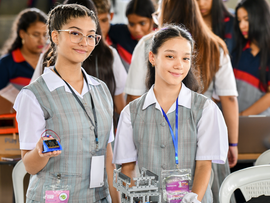
Tinkering with Tech and AI in Honduras: transforming STEM education
Tinkering with Tech and AI is a global initiative, led by the UNICEF Global Learning Innovation Hub, designed to equip students and teachers with the digital skills, technologies, and creative problem-solving skills required in an increasingly technology-driven world. By putting hands-on, collaborative and experiential learning at the core, the programme works to bridge the digital divide – with a dedicated focus on empowering girls and supporting underserved communities.
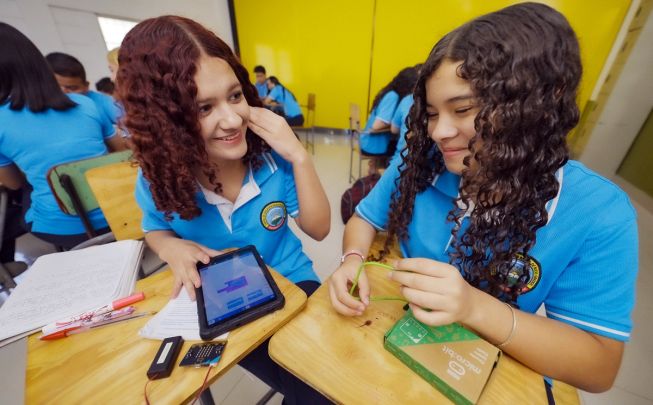
Photo: UNICEF
In 2024-2025, UNICEF launched a pilot programme in northern Honduras (as well as concurrently in Vietnam, the Maldives and Montenegro), using the BBC micro:bit to bring STEM learning into the classroom. As an implementing partner of the initiative, the Micro:bit Educational Foundation delivered pedagogical expertise, educator professional development, and teaching resources to help young learners build innovative solutions to real-world problems.
UNICEF video (Spanish with English subtitles): Creating, dreaming and building together. Tinkering with Tech and AI | UNICEF Honduras
The challenge
Students in northern Honduras navigate a complex environment affected by poverty, violence, migration and significant school dropout rates. On top of these socio-economic challenges, the region frequently suffers from extreme climate events, including severe flooding, hurricanes, and landslides that disrupt education.
Furthermore, a significant gender gap persists in science and technology. According to World Bank, - only 9% of female higher education graduates earn STEM degrees, compared with 26% of male graduates. Deep rooted gender stereotypes, a lack of visible female role models, and systemic social barriers historically limit girls’ participation in STEM fields.
The approach: design thinking to tackle real-world problems
UNICEF’s Tinkering with Tech and AI initiative introduced experiential learning anchored in the design thinking framework. Grade 6 students (11/12-year-olds) were encouraged to investigate real-world problems and create solutions using the micro:bit.
- Local problem solving: Students created solutions to local challenges. For example, students in a school on the outskirts of San Pedro Sula created early-warning alarm systems for heavy rains, alongside projects focused on hurricane alerts, and plant care systems for changing weather conditions.
- Educator capacity building: The initiative was designed for sustainability from the start, through national teacher training delivered with the Secretaría de Educación and online teacher support groups (communities of practice).
- Targeted support for girls: The programme was designed to achieve equitable participation and interest among both girls and boys. This included showcasing local female STEM role models, embedding gender-responsive facilitation strategies within teacher training, and providing practical prompts to ensure girls actively engage, lead discussions, and present solutions during the design thinking journey.
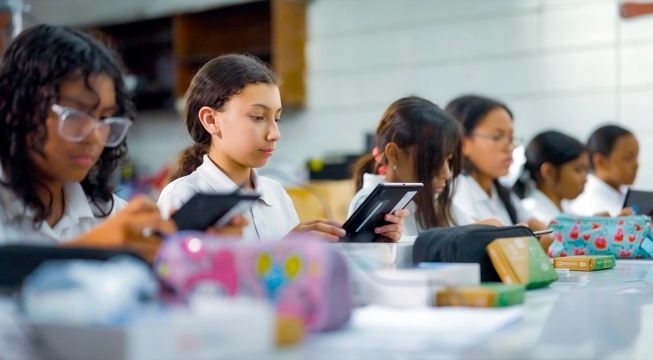
Photo: UNICEF
Impact and results
The UNICEF evaluation report for the pilot programme demonstrated transformational results in digital literacy, problem solving, and STEM engagement – particularly among girls.
- Total students engaged1,442 (716 girls, 726 boys)
- Schools reached20 schools
- Educators trained25 teachers, 25 school leaders, 3 government officials
Key outcomes:
- Boost in 21st Century skills and digital literacy – students taking part in the programme outperformed non-participating peers across all the measured skill categories:
- 80% of participating students exhibited tech skills after the pilot, compared with just 20% in the control group
- 88% of participating students exhibited adaptability skills, compared to 53% of non-participants
- 92% of participating students reported enjoying new things, compared to 63% of non-participants
- Narrowing the gender gap in the classroom –
- Teachers reported that girls participated as much or more than boys.
- 70% of girls and 68% of boys expressed an increased interest in pursuing STEM subjects by the end of the pilot
- High student engagement and enjoyment -
- 77% of students agreed they wanted to continue using the micro:bits in class
- 72% felt proud of what they built, agreeing with the statement ‘I made something cool using the micro:bit’
- Students displayed such strong enthusiasm that teachers regularly dedicated additional time during the school day, and students voluntarily completed project work outside of lessons
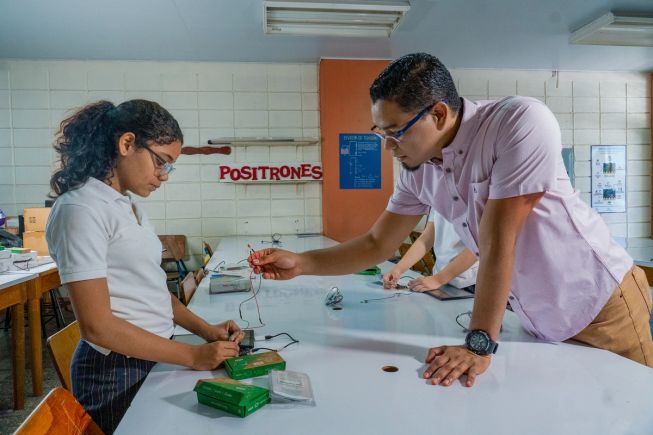
Photo: UNICEF
The future of the programme
Following the successful pilot, the UNICEF Global Learning Innovation Hub and Honduras Country Office, along with the Secretaría de Educación (Ministry of Education) secured funding to accelerate the programme. The MoE has initiated steps to embed Tinkering with Tech directly into the national curriculum. Great outcome as government ownership has been the goal from the outset.
At a January 2026 strategic partnership workshop in Helsinki, UNICEF, Arm, Micro:bit Educational Foundation and Raspberry Pi Foundation agreed an expanded rollout with a focus on AI. This expanded focus began in Honduras in May 2026. This next phase is guided by UNICEF’s approach to AI for children, ensuring AI tools introduced into classrooms are age-appropriate, safe, inclusive and impactful.
Since 2024, over 100 educational centres in Honduras have delivered micro:bit lessons, reaching over 123,000 learners. Through teachers’ online communities of practice and peer mentoring, UNICEF and partners are supporting nationally owned pathways to scale, as the Government of Honduras works to expand the programme to other regions of the country.

The success of Tinkering with Tech and AI in Honduras shows what is possible when committed partners come together around a shared vision. Thanks to the leadership of UNICEF Honduras, the Ministry of Education, technical support from Micro:bit Educational Foundation and dedicated teachers, students are gaining future-ready skills and the confidence to use technology for social good. For many marginalized children, especially girls, the initiative has opened new possibilities, helping them see themselves not just as learners, but as innovators and changemakers.

Leotes Helin, Education Manager- UNICEF Global Learning Innovation Hub