Transforming education across Colombia
Colombia Codes (</Colombia Programa>) is a landmark strategic initiative between the Colombian Ministry of ICT and the British Council. By integrating the BBC micro:bit into pedagogical practices across the country through high-quality materials and large-scale initiatives, the programme aims to help children and young people develop key digital skills for their future.
The challenge: scaling digital literacy nationwide
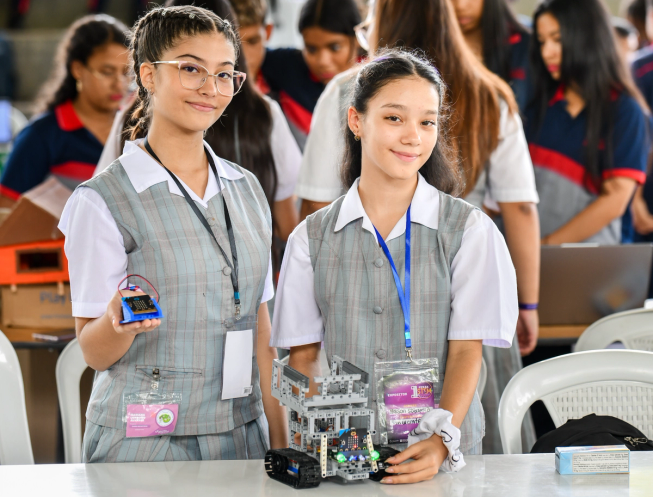
To prepare for the digital age, the Colombian government identified a need to empower teachers in public education by embedding computational thinking and problem-solving into the classroom. The challenge was not just about providing hardware but ensuring teachers across diverse environments - from bustling urban centres to remote rural schools - had the confidence and resources to teach coding effectively.
Building on the Coding for Kids programme with the Ministry of ICT and the Ministry of Education (2018-2022), the Colombia Codes programme (2023-2026) was launched as a £9 million multi-year investment to reach almost one million students.
British Council Colombia video (Spanish): Colombia Programa Documentary, the code to your future
The approach: a three-tiered strategy
The programme’s success is built on a comprehensive, three-phase rollout designed for sustainability and scale:
- A National Curriculum: The programme developed 79 pedagogical guides for grades 0-11 (KS1 to KS4). These were validated by over 1,755 teachers to ensure they effectively covered computing concepts, problem-solving, and digital citizenship.
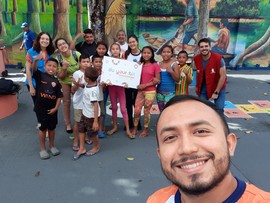
- Bridging the Rural Divide: To ensure no child is left behind, the programme designed specific "unplugged" materials and trained 700 teachers from 350 rural schools, bringing computational thinking to 14,000 students in areas with limited infrastructure through a tabletop game called Biobots.
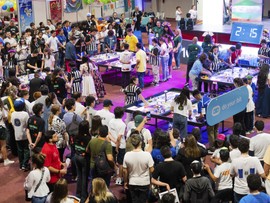
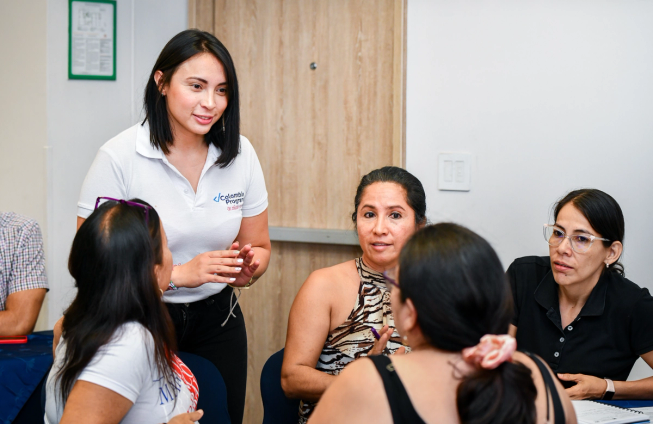
- The Coding Hub Model: The programme established 420 "Coding Hubs" in schools recognised for computing excellence. These hubs act as regional centres of expertise, where trained teachers then mentor their peers in neighbouring schools, creating a self-sustaining ecosystem of professional development.
Spotlight: the Playgr0und micro:bit Challenge
In 2025, Colombia Codes, in partnership with the Micro:bit Educational Foundation, localised the BBC Playground Survey to suit the Colombian educational content. This innovative data science project where children use the micro:bit to investigate and gather information about their surroundings, was part of next gen, an ambitious programme to roll-out of the micro:bit to over 90% of primary schools in the UK.
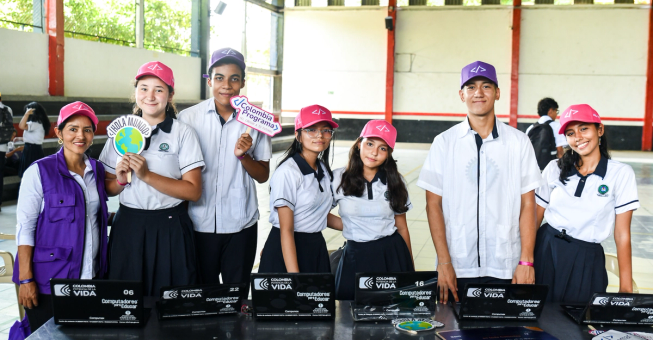
The Playgr0und micro:bit Challenge encouraged students to explore the outdoors with their micro:bits to investigate biodiversity, measure areas, and track physical activity. The Challenge was implemented through the Coding Hubs and neighbouring schools, where teachers collaborated to lead outdoor learning. The impact was widespread:
- 55,458 micro:bits delivered to 840 schools and 2,610 teachers trained
- 102,112 students were impacted in total through the peer-training strategy
The feedback was incredibly positive - 97.5% of teachers reported that their students enjoyed the challenges and 91.1% expressed interest in doing more.
Impact and inclusion
Since 2019, the Government of Colombia has distributed approximately 147,500 micro:bits, cementing it as the primary tool for learning to code in the country. The current Colombia Codes phase has achieved significant milestones in inclusion and reach:
- Total Student Reach947,000+ students reached over the 3-year programme
- Teacher Gender Diversity60% of participating teachers are women
- Accessible Education2,952 students with disabilities participated
- Rural Impact11% of beneficiary schools are in rural communities
- Projects in Coding Hubs7,663 projects in over 839 fairs with over 212,729 students participating
- Participation of girls in projects55% girls leading project showcases and 51% girls building prototypes
Teacher Feedback
The programme’s emphasis on usability is reflected in the teacher feedback data:
- 91.3% of teachers found the micro:bit activities easy to implement
- 94.7% found the instructional materials useful for their needs

It is our work to teach students the algorithm of their lives through computational thinking.

Teacher, Colombia Codes
Knowledge sharing: from Colombia to the UK
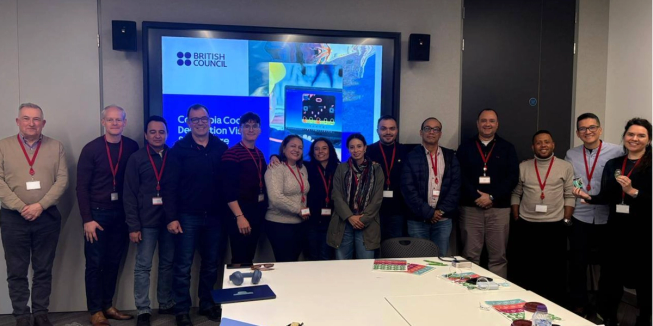
The programme’s influence now extends beyond Colombia’s borders. In March 2026, a delegation of 11 expert teachers traveled to the UK for an enrichment mission and an intensive English language development course. As part of that, they got to meet with the Micro:bit Educational Foundation.
During this knowledge-sharing session, the teachers presented their best practices in project-based learning and gender inclusion. Their stories highlighted a profound shift in classroom culture, where students are no longer just consumers of technology, but creators and problem-solvers who are "falling in love" with coding through the micro:bit.
The goldmine is the micro:bit; it changes the mindset of the students we work with.
Teacher from the Colombia Codes delegation to the UK
The exchange was both inspiring and energising for all parties involved and we are excited to continue our fruitful relationship with British Council and Colombia’s Ministry of ICT in years to come.
Find out more
To learn more about the impact of the Colombia Codes programme, visit British Council's website, watch the initiative in action (Spanish) or visit the official MinTIC portal (Spanish).
Colombia Codes is one of the most ambitious and successful national initiatives we’ve seen. The programme’s success lies in its community-first approach - using regional ‘Coding Hubs’ to ensure that every teacher has the confidence to inspire their students. Seeing over 100,000 students already impacted through peer-training is a milestone that reflects the incredible dedication of the Colombian Ministry of ICT and the British Council.
Melanie Washington, Chief Partnerships Officer at Micro:bit Educational Foundation