Los Angeles County Office of Education: bridging the STEM divide
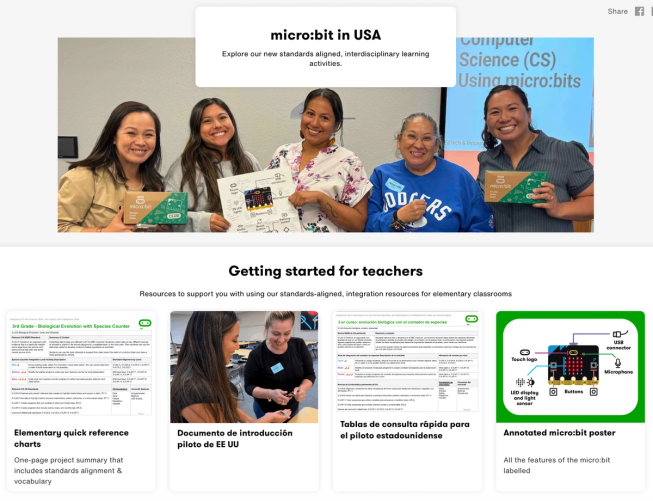
In 2025, the Micro:bit Educational Foundation joined forces with the Greater Los Angeles Area Education Fund (GLAEF), Los Angeles County Office of Education (LACOE), and Texas Advanced Computing Center (TACC) to launch a transformative pilot project.
With funding from Google.org, we worked together to co-design physical computing resources and professional development aligned to the needs of educators in some of California’s most diverse and economically challenged communities. The project aimed to identify best practices for supporting elementary educators to integrate physical computing and computer science (CS) across their curriculum.
The challenge: ensuring equitable access
Los Angeles County serves nearly 1.3 million Kindergarten-12th grade students. The demographics of the region highlight a significant need for targeted support with seven out of 10 students from socioeconomically disadvantaged backgrounds and over 228,000 students (17.5%) who are English learners.
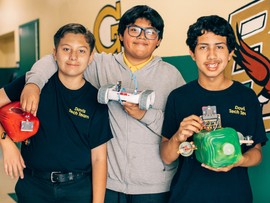
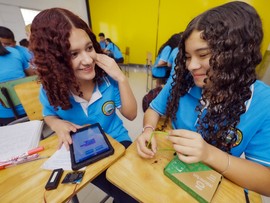
The goal of the pilot was to move beyond traditional screen-based coding and introduce physical computing to 3rd through 5th grade teachers. By focusing on schools serving historically underrepresented populations in STEM, the project sought to broaden participation and ignite a lifelong interest in technology.
The solution: training, tools and support
The initiative focused on a holistic approach to teacher empowerment, ensuring that educators felt supported from the initial training through to classroom implementation. Key components included:
- Co-designed curriculum: Development of California standard-aligned teaching resources specifically for upper elementary students.
- Professional development (PD): Intensive training sessions held in the summer and early fall of 2025.
- Classroom kits: Every participating teacher received a kit of 10 micro:bits and supporting resources to ensure immediate, hands-on implementation in the classroom.
The impact: data-driven results
An external evaluation conducted by the Texas Advanced Computing Center (TACC) at The University of Texas at Austin confirmed that the pilot successfully reached its target audience and delivered measurable growth in both teacher confidence and student engagement.
- 154teachers across 84 schools and 28 districts
- 90%of participating schools were Title I (federal aid schools)
- 3,172students reached (mainly grades 3-6)
- 82%of teachers felt skilled in CS integration (up from 42% before)
Key research findings:
- 99% of teachers said that students increased their enjoyment in computer science.
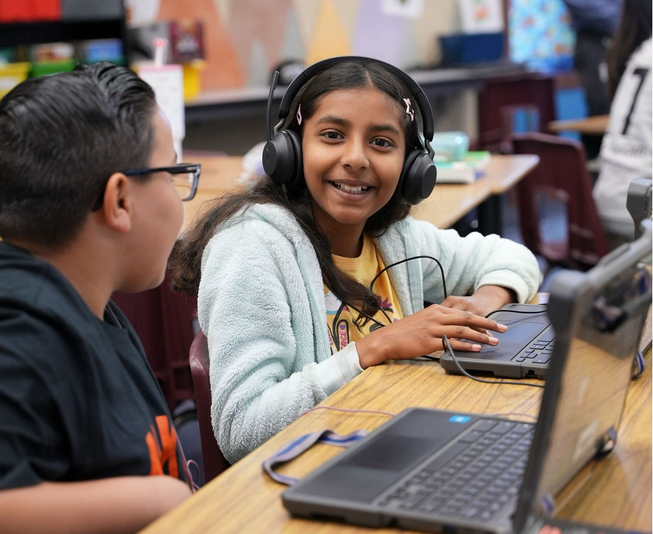
- 96% of teachers said that hands-on interaction provided by the micro:bits was an "important" factor in enhancing student learning.
- 96% of teachers agreed that students increased their learning skills (e.g. problem-solving) as a result of using the micro:bits.
- 95% of teachers reported increased confidence in teaching CS as a result of using micro:bit resources.
- 90% of educators found that micro:bit helped them meet learning objectives in non-CS subjects, proving the tool's versatility across the curriculum.
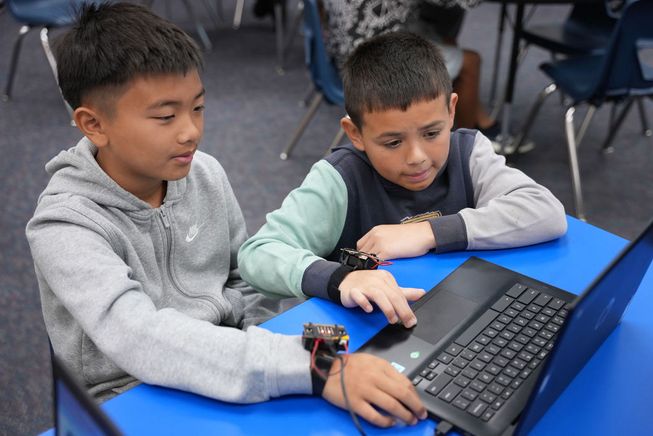
Voices from the classroom

The project has opened me up to new possibilities for instruction as my students can learn about the endless ways to use technology in the classroom

Teacher
The project will allow my students to explore content they are excited about and gain interest in coding and other STEM careers.
Teacher
My favorite part of using micro:bit was coding what I wanted it to do and seeing my vision come to life.
Student
Conclusion: a blueprint for the future
The US Pilot project met and exceeded its primary objectives. By increasing access to physical computing resources and improving teacher capabilities, the initiative has created a sustainable model for CS integration.
Students didn't just learn to code; they learned to problem-solve, collaborate, and create. As one teacher noted: "This will allow students to take control of their learning through a hands-on approach.”
With the success of this pilot, the Micro:bit Educational Foundation and its partners continue to pave the way for a more inclusive and tech-literate future for all students, regardless of their zip code.
Are you a teacher?
Want to learn more about bringing micro:bit to your classroom? Check out our standards-aligned resources.