Micro:bit Innovation and Research Lab - Lancaster University and Micro:bit Educational Foundation
New research and innovation lab to pioneer future directions for the micro:bit and physical computing
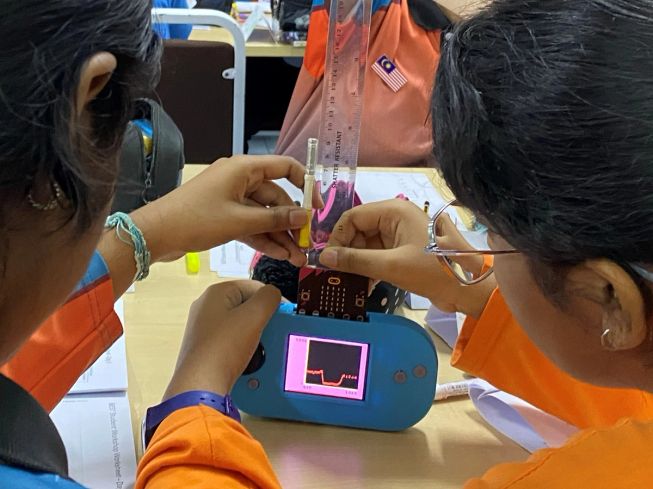
Lancaster University and the Micro:bit Educational Foundation are joining forces to create a research hub that will spearhead new innovations in physical computing and digital education.
The Micro:bit Innovation and Research Lab (MIRL) at Lancaster University will build on the global impact of the BBC micro:bit – a pocket-sized programmable computer that’s revolutionising digital learning.
A long-standing partnership
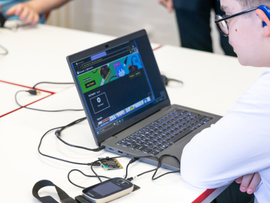
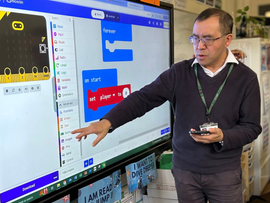
Created in the UK a decade ago by a BBC-led consortium, the micro:bit takes computing off the screen and into young people’s hands, making it more physical and tangible.
From classrooms in the Amazon rainforest to inner-city schools in Los Angeles County, more than 11 million micro:bits have been distributed globally. Alongside the device, educators are supported by microbit.org, which provides free software, resources and professional development.
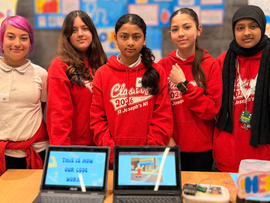
Through the efforts of many partners, led by the Micro:bit Educational Foundation, micro:bit has empowered more than 70 million children in over 85 countries to become coders and technology creators.
As the sole academic institution involved from the outset, Lancaster University researchers played a key role in the creation of the micro:bit device. They developed the micro:bit’s run-time operating system, helped deliver the hardware, and shaped the coding experience.
These contributions to the global success of the micro:bit were recently recognised when Lancaster University, a leading UK university with internationally-recognised research expertise in physical computing, received, from their Majesties the King and Queen, the nation’s highest education honour – a Queen Elizabeth Prize for Education.
Led by Professor Steve Hodges, Professor Joe Finney and Dr Elisa Rubegni, Lancaster University, in collaboration with the Micro:bit Educational Foundation, are launching MIRL to pioneer new micro:bit innovations in physical computing and computing education.
Drawing on Lancaster University’s strong reputation for high-quality research and tradition of interdisciplinary approaches to problem solving, MIRL will deliver world-leading physical computing research and innovation. This will sow the seeds for a more empowered, productive and inclusive workforce equipped with key digital skills for navigating today’s rapidly-changing technological landscape.
World-leading, impact-focused research
MIRL will be pivotal to helping the Micro:bit Educational Foundation fulfil their ambition of enabling more than 100 million children gain digital skills and build confidence working with technology through the micro:bit by 2028.
Steve Hodges, Lancaster University Distinguished Professor and Director of MIRL, said: “Research shows that physical computing is a powerful way to engage young minds. It teaches coding and computational thinking, as well as twenty-first century skills such as design, creativity, critical thinking and collaboration.
“The micro:bit has been hugely successful over the last decade. It’s engaged millions of young people from all around the world, from here in the UK to the Amazon Rainforest. Time and again, we see it sparking their interest in learning digital skills.
“As the digital landscape evolves at an ever-increasing pace and we look to the next ten years of the micro:bit and physical computing, it’s vital that we continue innovating, researching and developing exciting new ways to capitalise on and adapt this amazing digital educational platform."
Through world-leading, impact-focused research, MIRL will grow the body of evidence around best-practice for using physical computing in education, and develop and experiment with new digital technologies that lay a solid foundation for the next decade of the micro:bit.
MIRL will also act as a hub for micro:bit innovators around the world and the global research community, facilitating sharing and adoption of new physical computing activities, approaches and devices.
Gareth Stockdale, CEO of the Micro:bit Educational Foundation, said: “MIRL will bring together all the incredible people across the world who are delivering cutting-edge research around micro:bit, and also help us to explore new tech approaches for physical computing. By building this community with Lancaster University, we hope to consolidate and supercharge our understanding and development of the micro:bit.”
Looking for partners and collaborators
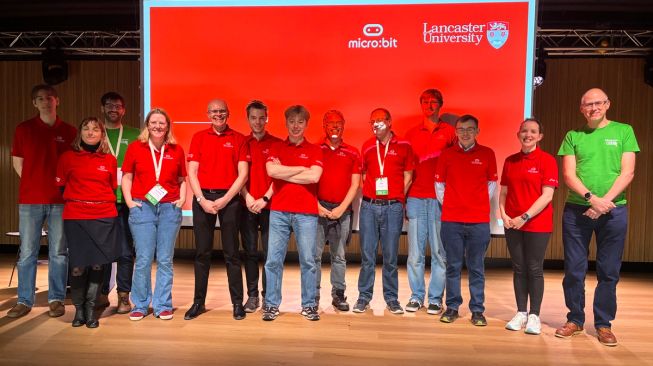
Under MIRL's direction, a team of research staff, research students, visitors, and undergraduates are already working on some exciting projects. MIRL is also collaborating with other universities such as Aarhus University in Denmark, Georgia Institute of Technology in the USA, Sunway University in Malaysia and University College London.
There will be further opportunities for postgraduate study, visiting researchers and research collaborations as the Lab develops – anyone interested should contact mirl-enquiries@lancaster.ac.uk for more information.
The Lab has received initial funding from Lancaster University, the Micro:bit Educational Foundation and a number of individuals and technology organisations.
MIRL welcomes additional offers of support, financial and otherwise, from anyone interested in its mission to deliver the future of physical computing education and to empower yet more young people over the next decade.
Find out more about supporting MIRL by contacting mirl-enquiries@lancaster.ac.uk.
More information about MIRL is available by visiting https://lancaster.ac.uk/mirl