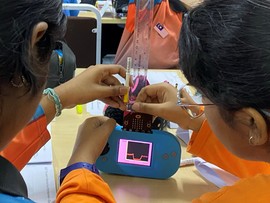
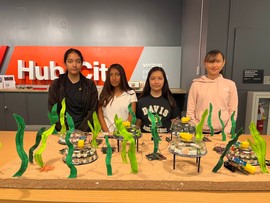
Scaling up Tinkering with Tech with UNICEF and partners
Developing students’ and teachers’ AI literacy and skills through physical computing, in partnership with the UNICEF Global Learning Innovation Hub and global partners
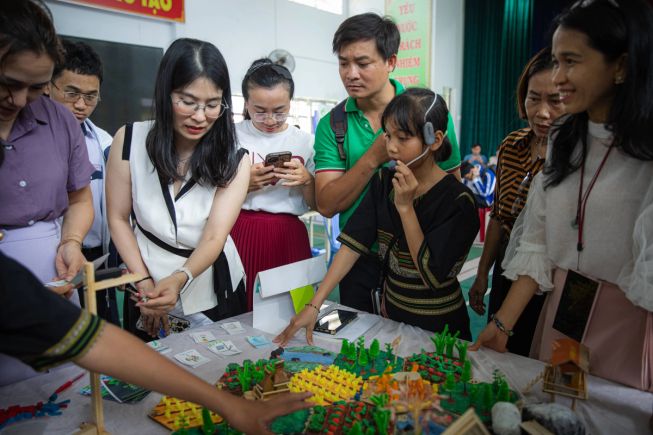
Launched in 2024, Tinkering with Tech (TwT) is a programme led by UNICEF’s Global Learning Innovation Hub. Delivered in collaboration with the Micro:bit Educational Foundation, national governments and other key partners, TwT focuses on building 21st century skills in children through creative, hands-on digital learning.
Piloted across four countries, TwT combines design thinking approaches with physical computing tools, including the BBC micro:bit, to help learners and teachers learn in innovative, practical, and locally relevant ways. Through this work, the programme successfully co-developed adaptable learning resources that integrate innovation and digital skills into education systems in meaningful, locally relevant ways - laying the groundwork for deeper, scalable impact.
Building on the success of the initial pilots, UNICEF is now expanding Tinkering with Tech to include a stronger focus on artificial intelligence (AI) literacy and we are pleased to continue contributing to the initiative. In today’s rapidly evolving digital landscape, AI is transforming how we live, work, and learn. For young people, understanding these technologies is now essential for full participation in the modern world.
Expanding the programme with global partners
The Tinkering with Tech initiative is led by UNICEF’s Global Learning Innovation Hub, based in Helsinki, aiming to accelerate equitable access to world-class digital learning solutions under UNICEF’s Digital Education Strategy (2025 – 2030). To support this ambitious expansion, we are excited to join a global community of partners to build the future of learning.
The initiative is implemented through a collaborative partnership model. As an implementing partner, the Micro:bit Educational Foundation contributes expertise in physical computing, design-thinking approaches, and classroom-ready learning materials.
The initiative is funded by UNICEF, with key strategic support from Arm, enabling UNICEF to work with partners to scale impact across diverse education contexts.
The Raspberry Pi Foundation, a global education charity, joins the initiative as an implementing partner to provide additional expertise in the responsible integration of AI into teaching and learning.
Building AI literacy around the world
Building on the existing TwT materials, the partners will work together to design a series of AI learning resources, sequenced to build progression in key concepts relevant for the age range, some of which will incorporate the micro:bit and CreateAI.
The 2024 pilot launched in Honduras, Maldives, Montenegro and Viet Nam, and the initiative plans to now expand to Lao PDR and Uzbekistan.
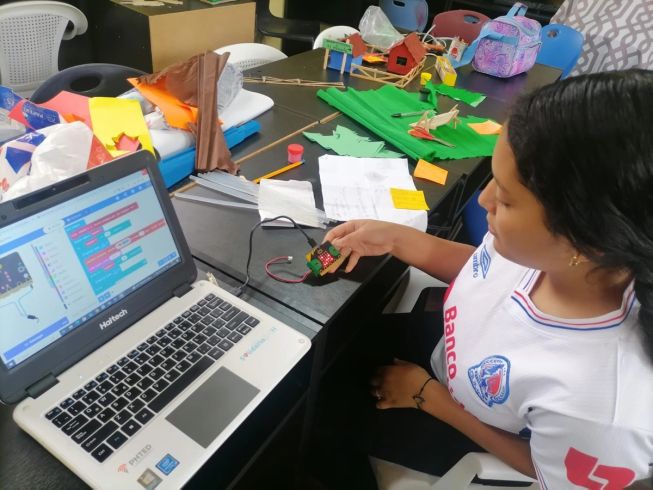
Making a locally sustainable programme
By developing adaptable teacher support that suits local needs and contexts, this programme will take a huge step towards inspiring every child to create their best digital future.

The Tinkering with Tech project and our collaborations with UNICEF Global Learning and Innovation Hub have already had a huge impact on building both teacher and student confidence. We are excited to become a partner and expand this project with Learning Pathways for AI and micro:bit CreateAI, to empower even more children to become creators, and not just consumers, of AI.

Melanie Washington, Chief Partnerships Officer, Micro:bit Educational Foundation
To support the responsible deployment of EdTech, AI and other digital solutions across the globe, we need to equip children and teachers with skills fit for the 21st century. This means fostering AI and digital literacy, advancing education in science, technology, engineering and math, ensuring equity and inclusion for girls, children with disabilities and other marginalized groups, and building locally driven EdTech solutions in partnership with governments, the private sector and educators that deliver lasting results.
Frank van Cappelle, Head of UNICEF’s Global Learning Innovation Hub