Kidsdoor
A hands-on tech camp offering opportunities for students from underrepresented backgrounds to explore innovation using the micro:bit.
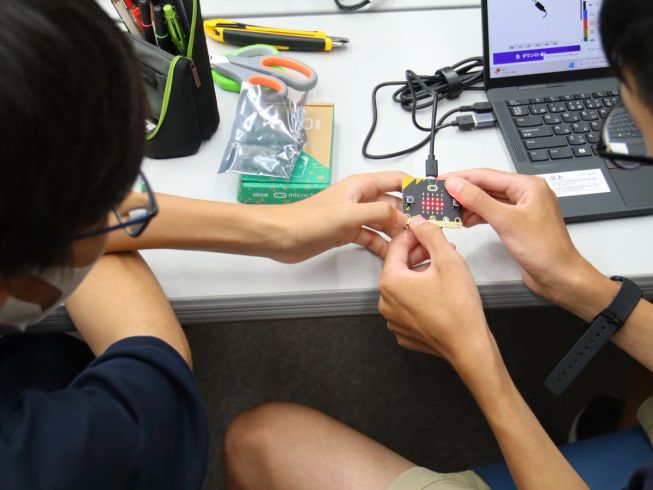
Two students playing with a micro:bit. Image: Kidsdoor
The non-profit organization Kidsdoor hosted the IT Challenge Camp, a three-day residential program in Tokyo designed to introduce high school students to the world of technology and innovation. Centered around the micro:bit, it was developed with content and planning support from the Micro:bit Educational Foundation and micro:bit Champions, and generous funding from Qualcomm Inc.
The first camp, held in 2024, focused on high school girls. Students from all over Japan engaged in ideation, programming, and prototyping using micro:bits to explore how technology can solve real-life problems. This initiative was part of Kidsdoor’s broader mission to close the opportunity gap and provide transformative educational experiences for youth from underrepresented backgrounds - particularly girls in tech - while addressing issues such as child poverty and social inequality.
Building on the success of the 2024 Girls Camp, the 2025 program expanded to include both girls and boys, offering equal opportunities for all students to experience the excitement of digital creation. In these three-day hackathon-style camps, 24 high school girls and 24 high school boys from economically disadvantaged families across Japan took part. Under the theme "Bringing IT closer to you and turning ideas into reality", participants progressed from their first hands-on experience with the micro:bit, to prototyping ideas using sensors, motors, and other components. The creative projects included: a device that measures humidity and temperature to alert for heatstroke; an interactive installation that plays sounds and glows in rainbow colors as you walk; a reward box that dispenses snacks when a goal is achieved; an umbrella stand with an alert function to prevent leaving umbrellas behind.
Through this process, participants not only learned how IT works but also gained valuable experience in creating new value through technology, fostering creativity, collaboration, and confidence in shaping a better future.
Project goals
The camp aimed to:
- Empower high school students with the confidence and skills to explore technology.
- Introduce creative problem-solving using microcontrollers in an inclusive and supportive environment.
- Provide opportunities for students from economically disadvantaged backgrounds to experience hands-on digital learning.
- Foster collaboration, self-expression, and social awareness through technology-driven projects.
- Inspire long-term interest in STEM pathways and encourage participants to see how technology can be used to improve their communities.
Kidsdoor recognized the growing need for equitable and inclusive tech education in Japan and sought to create an immersive experience that would spark curiosity, creativity, and confidence in the next generation of innovators.
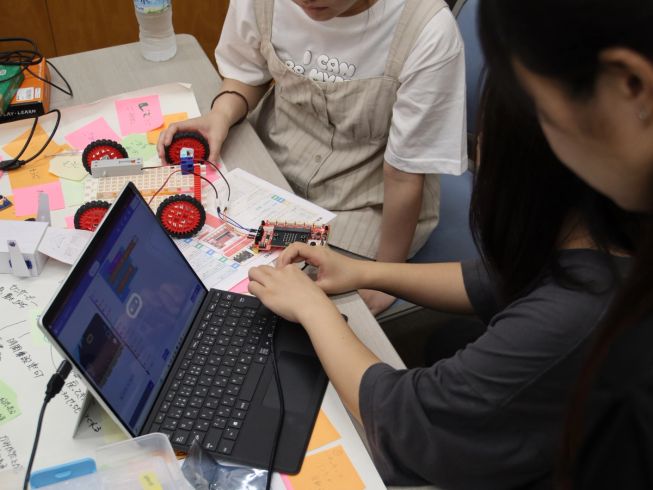
Some students connecting a micro:bit to accessories for their program. Image: Kidsdoor
Impact and results
- Number of participants: 24 high school girls and& 24 high school boys from across Japan.
- Skill development: 100% of attendees had no prior experience with micro:bits; by the end of the camp, all successfully completed original projects.
- In response to the question, "Do you think IT is a useful tool for self-expression? (e.g., presentations, social media, etc.)", 100% of the participants answered "I think so" or "I strongly think so."
- In response to the question, "Do you think it's possible to create something entertaining or helpful for others using the internet and computers?", 100% of the participants answered "I think so" or "I strongly think so".
- Continued engagement: 100% of participants attended follow-up sessions, with many expressing interest in pursuing further tech learning.
- Completed projects: Participants created tech-enabled prototypes to solve problems in their daily lives and in their social lives.
- What students think after the camp:

We were able to identify a problem ourselves and create a solution through our project.

Even though there were parts that were difficult to realize, we did our best.
When our project succeeded, we were able to share the joy with our group members.
Next steps
Kidsdoor is exploring possibilities to continue and further develop the IT Challenge Camp in the future. Building on the success of the 2024 and 2025 programs, the organization hopes to create more opportunities for high school students - regardless of gender or background - to discover the joy of technology and gain the confidence to shape their own futures.
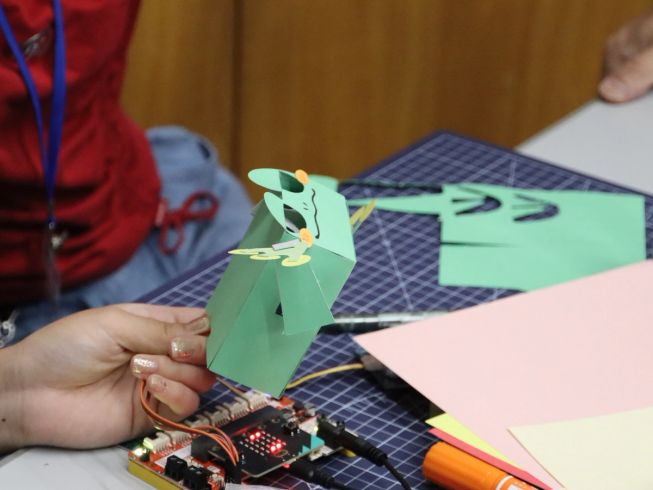
Using paper to make a frog, to get creative with the micro:bit and servos. Image: Kidsdoor